
Casimir Lefaucheux: The Origins of Pinfire Guns and the History Behind 2mm Miniatures
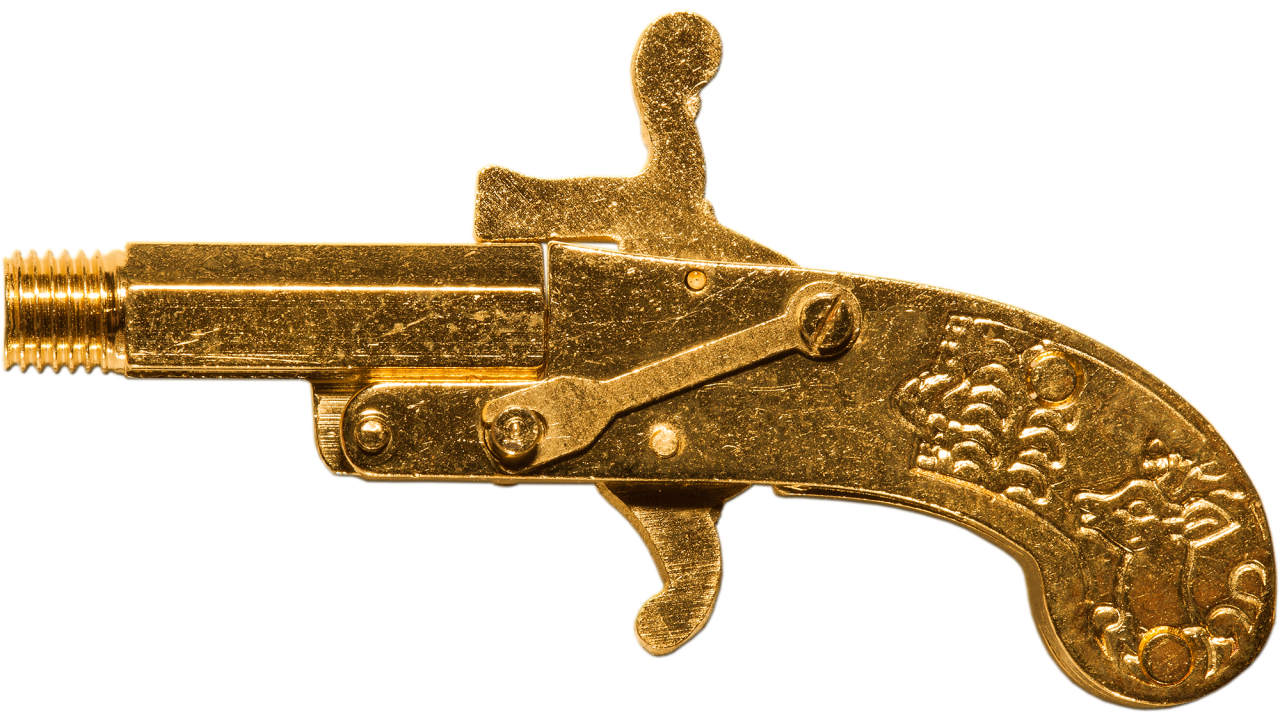
The history of 2mm pinfire guns begins with one of the most important innovations in 19th-century firearm technology: the pinfire cartridge. At the heart of this development was Casimir Lefaucheux (1802-1852), a French gunsmith and inventor whose work helped transform the design of firearms and ammunition.
Although the miniature pinfire pistols familiar to collectors today appeared decades after his lifetime, Lefaucheux's invention established the technological foundation that would eventually inspire an entire tradition of miniature mechanical craftsmanship.
Who Was Casimir Lefaucheux?
Casimir Lefaucheux was born on January 26, 1802, in Bonnétable, France. He became an influential gunsmith during a period of significant technological change in European firearms manufacturing.
During the early 19th century, most firearms relied on muzzle-loading mechanisms or separate percussion caps for ignition. These systems presented limitations in convenience, reliability, and loading speed.
Lefaucheux worked on developing more practical breech-loading firearms, building upon earlier innovations in cartridge technology. His experiments eventually led to one of the most recognizable ammunition systems of the period.
The Invention of the Pinfire Cartridge in 1835
In 1835, Casimir Lefaucheux patented an important improvement to his breech-loading system: the pinfire cartridge, also known as the Lefaucheux pinfire system.
Unlike traditional percussion firearms, which required a separate external cap, the new cartridge incorporated its ignition primer into the ammunition itself.
Its most distinctive feature was a small metal pin projecting from the side of the cartridge base. This pin was connected to the internal ignition system.
The innovation helped advance the development of self-contained ammunition and contributed to more practical breech-loading firearms.
Lefaucheux's work represented an important milestone in the transition from older percussion systems toward modern cartridge-based firearms.
Eugène Lefaucheux and the Development of Pinfire Revolvers
The Lefaucheux family's contribution to firearms history continued through Casimir's son, Eugène Lefaucheux (1832-1892).
Following his father's work, Eugène developed new firearms incorporating pinfire technology. Among his most significant achievements was the Model 1854 pinfire revolver, which became an influential design in European firearms manufacturing.
During the second half of the 19th century, pinfire revolvers were manufactured in several European countries, including France and Belgium.
As rimfire and centerfire ammunition became more widely established, pinfire technology gradually declined in mainstream firearms manufacturing.
Nevertheless, the system remained an important chapter in the history of mechanical innovation.
From Historical Pinfire Firearms to 2mm Miniature Guns
The development of miniature pinfire firearms took place considerably later than Casimir Lefaucheux's original invention.
By the end of the 19th century, European craftsmen were producing exceptionally small mechanical objects, including miniature pistols inspired by established firearm designs and ignition systems.
Among the most recognizable examples is the Berloque miniature pinfire pistol, associated with Austrian gunsmith Franz Pfannl, who began producing Berloque or watch-fob pistols in 1897.
These tiny mechanical objects became notable for their compact dimensions, intricate engineering, and unusual designs.
The 2mm pinfire format later became associated with a distinctive category of miniature pistols and novelty collectibles. Different historical models were produced with varying configurations and functions, including cap-firing examples.
Today, 2mm pinfire miniatures are appreciated by collectors interested in mechanical craftsmanship, historic design, and the evolution of small-scale precision engineering.
The Legacy of Lefaucheux in Miniature Pinfire Collecting
Casimir Lefaucheux did not invent the 2mm miniature pistol. His contribution was much more fundamental: he helped establish the pinfire cartridge principle that later designers adapted in different forms.
Understanding this distinction is important for collectors who wish to appreciate both the original 19th-century technology and the miniature objects that appeared in subsequent decades.
Historical models such as Berloque miniatures represent a later chapter in this story, combining European metalworking traditions with the fascination for mechanical miniaturization.
The legacy of Casimir Lefaucheux therefore extends beyond the firearms produced during his lifetime. His name remains closely connected with the history of pinfire technology, while later miniature designs demonstrate how historic engineering concepts continued to influence craftsmanship across generations.
From the workshops of 19th-century France to the precision-made miniatures of Austria and other European countries, the story of pinfire technology is one of invention, adaptation, and enduring historical interest.